Peptide Publications Archive
Showing items in Chemical Biology · Clear filter
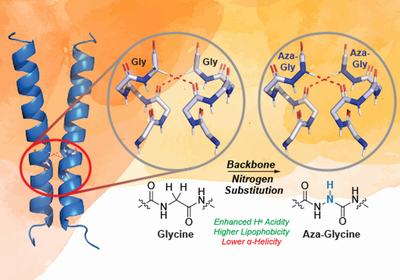
Probing GxxxG Interfaces
Newberry Lab
Glycine residues at GxxxG motifs stabilize transmembrane helix dimers through Cα–H hydrogen bonds, but their lack of side chains makes them difficult to engineer. Replacing …
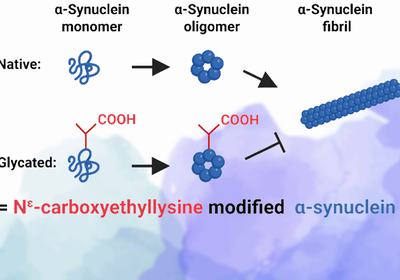
Glycation Codes αSyn
Becker Lab
A single glycation mark on α-synuclein reshapes its entire aggregation behavior, but the outcome depends sharply on which lysine carries it. A new semisynthetic platform …
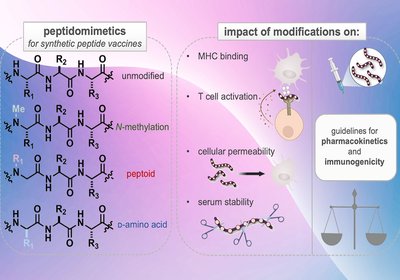
Tuning the Antigen
Pires Lab
Peptide-based cancer vaccines aim to train the immune system against tumor-specific neoantigens, and a growing share of those targets comes from post-translational modifications rather than …
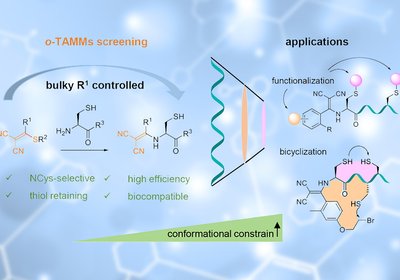
Steering Cysteine Chemistry
Tsai Lab
Most reagents that target N-terminal cysteine consume both the amine and thiol, locking the ligation site into an inert heterocycle. A new steric-control strategy forces …
Labeling Serine Selectively
Chen Lab
Serine and threonine hydroxyl groups are among the most difficult side chains to modify selectively in complex peptides, yet they govern phosphorylation, glycosylation, and enzyme …

Chaperone Orientation Rules
Gierasch Lab
Three closely related Hsp70 molecular chaperones grip the same model peptides in strikingly different orientations: bacterial DnaK shows no directional preference, human Hsc70 leans toward …
Amide Proteome Mapped
Raj Lab
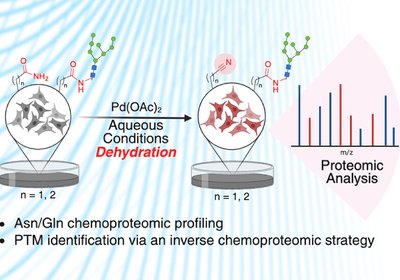
A palladium-mediated dehydration reaction converts asparagine and glutamine amides to nitriles, opening nearly 9% of the human proteome to chemoproteomic interrogation for the first time...
Silent Residues, Activated
Raj Lab
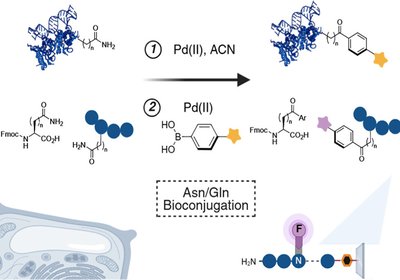
Asparagine and glutamine make up over 8% of the human proteome yet resist chemical modification — until now, when a palladium-mediated strategy converts their amide …
Light-Driven Ligation
Taylor Lab
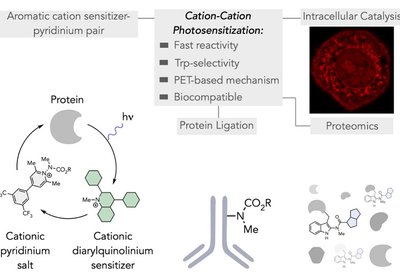
A fully organic photosensitizer pair labels proteins inside living cells with 93% selectivity for tryptophan, reaching nuclear compartments without any metal catalyst
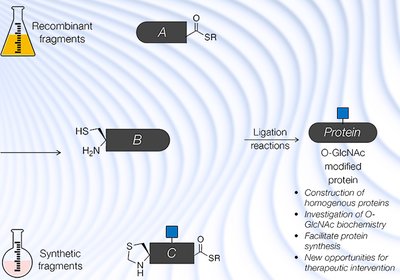
Sugar's Hidden Hand
Pratt Lab
A single O-GlcNAc on α-synuclein forces a distinct amyloid strain that spreads far less pathology in neurons and mouse models than the unmodified protein
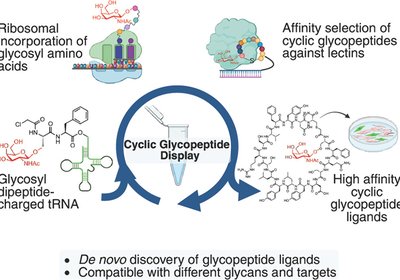
Sweet Reprogramming of the Ribosome
Payne Group
A dipeptide reprogramming trick lets ribosomes build glycopeptide libraries for the first time, yielding potent P-selectin inhibitors and a monomeric LYTAC alternative
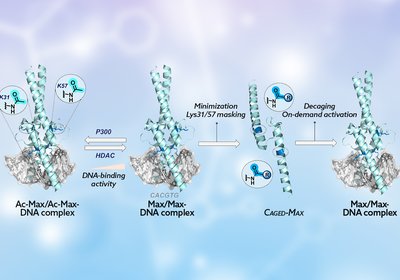
Switching Max On
Jbara Lab
A photocaged Max transcription factor sits dark and silent until a flash of UV light removes two chemical masks and restores full DNA-binding activity within …
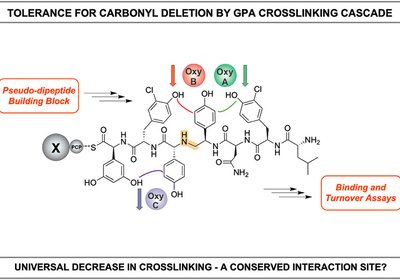
Backbone Sensitivity
Cryle Lab
Researchers supervised by Professors Julien Tailhades and Max J. Cryle from Monash University, Australia, published in ACS Chemical Biology, have developed a chemoenzymatic strategy …
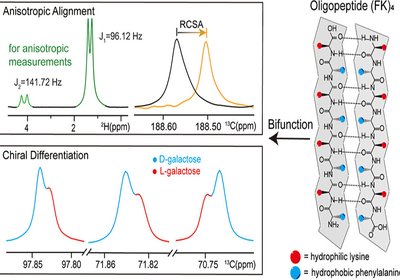
NMR Double Agent
Liu Lab
Researchers in the Liu Group at the Innovation Academy for Precision Measurement Science and Technology, Chinese Academy of Sciences, published in J. Am. Chem. Soc. …
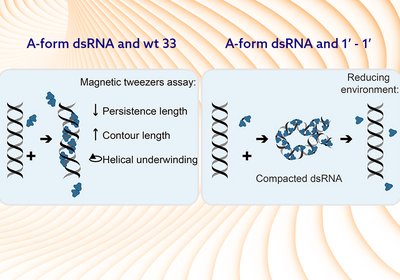
Unwinding RNA Delivery
Dulin Lab
Researchers in the Dulin Group at Vrije Universiteit Amsterdam investigated the biophysical effects of two peptides derived from the tomato aspermy virus 2b, TAV2b, protein …
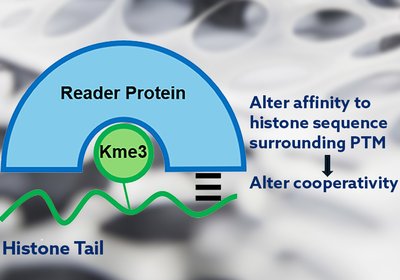
Cooperativity Unlocked
Waters Lab
Christopher Travis, and colleagues in Marcey Waters' laboratory at the University of North Carolina, published in Biochemistry, devised an elegant strategy to probe why …
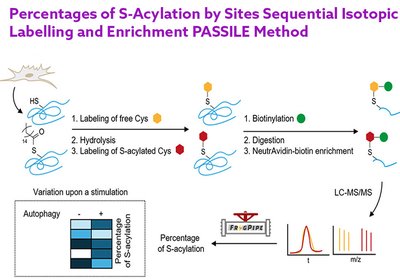
Quantifying S-Acylation
Thinon Group
Researchers in the Emmanuelle Thinon Group at the University of Bordeaux, published in ACS Chemical Biology as part of the special issue "Lipids and Lipidation," …
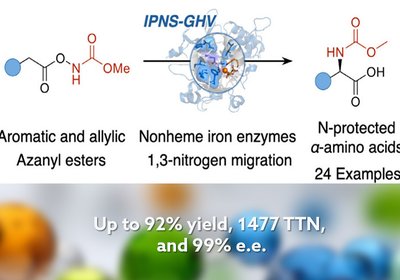
Nitrogen Walks
Huang/Xiao Labs
Noncanonical amino acids have become indispensable tools in chemical biology and drug discovery. By introducing side chains that nature never encoded, researchers can endow peptides …
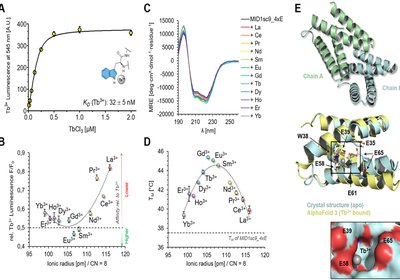
Catching Lanthanides
Zeymer Lab
Lanthanide ions offer an extraordinary toolkit for biomolecular engineering. Their long-lived luminescence enables sensitive detection, their paramagnetism provides NMR structural probes, their strong anomalous X-ray …
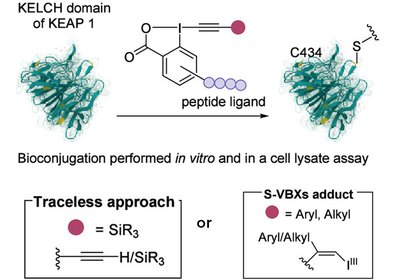
Guided Precision
Waser Lab
Cysteine residues attract chemical attention. Their nucleophilic thiol groups react readily with electrophiles, making them popular handles for attaching drugs, fluorophores, and other payloads to …
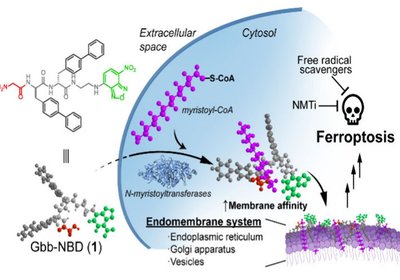
Borrowed Machinery
Xu Lab
N-myristoylation is a common posttranslational modification in which the enzyme N-myristoyltransferase, NMT, attaches a 14-carbon fatty acid to an N-terminal glycine residue. This lipid anchor …
Optimizing Peptide Switches
Maly Lab
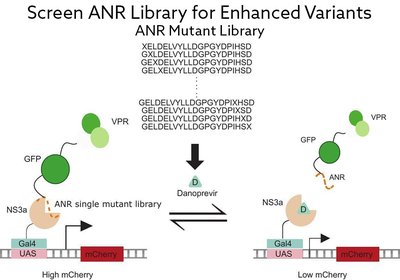
Chemically-controlled genetic tools allow researchers to switch cellular processes on or off with small molecules, offering precise temporal and dose-dependent control. While chemically-inducible dimerization systems …
Taming Arginine
Raj Lab
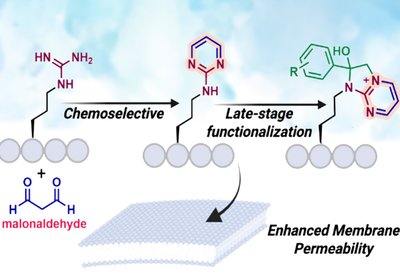
Selective modification of amino acid side chains has become a central strategy for expanding peptide function beyond the limits of ribosomal chemistry. Yet one residue …
Iodo Quantification
Lilienkampf Lab
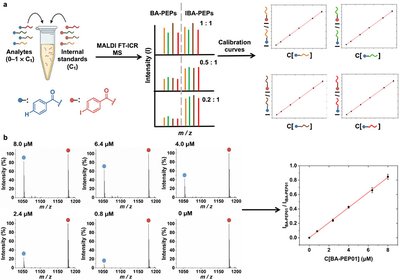
In work published in ACS Chemical Biology, David J. Clarke, Annamaria Lilienkampf, and collaborators from the University of Edinburgh, introduce an iodo based labeling strategy …